Quick Answer:
Yes, Indian citizens can buy eligible property in Dubai without becoming UAE residents first. Foreign ownership is permitted in designated areas, subject to Dubai's property rules.
-
Indian buyers can purchase qualifying freehold property in designated Dubai areas.
-
Non-resident buyers can register eligible purchases using a valid passport.
-
Buyers must complete the required Dubai Land Department registration process.
-
Indian residents must follow applicable FEMA and RBI remittance rules when sending funds from India.
-
Property ownership does not automatically provide UAE residency or a Golden Visa.
-
Buyers should budget for the property price, registration fees, service charges, and other transaction costs.
This guide explains the legal process, ownership rules, buying steps, documents, costs, remittance requirements, mortgage options, and Golden Visa considerations for Indian buyers.
Can Indians Buy Property in Dubai Legally?
Yes. According to Dubai Land Department's foreign ownership guidance, foreign nationals can own property in designated freehold areas. DLD also states that real estate transactions should be registered in its records to protect ownership and transfer rights.
What Ownership Rights Do Indian Buyers Receive?
In designated areas, foreign nationals can hold freehold title. DLD's investor guidance describes foreign freehold ownership as unrestricted by time and extending to the land and buildings.
An eligible property can generally be sold, leased, transferred, or inherited subject to UAE law and the property's legal conditions. Understanding freehold property in Dubai is therefore essential before choosing a location.
Do Indians Need a UAE Visa to Buy Property?
No. DLD's current property-sale registration service accepts a valid passport for non-resident foreign buyers and lists the service as available to all residency statuses.
A residence visa may become relevant after purchase, but it is not required to buy an eligible freehold property.
Where Can Indian Citizens Buy Property in Dubai?
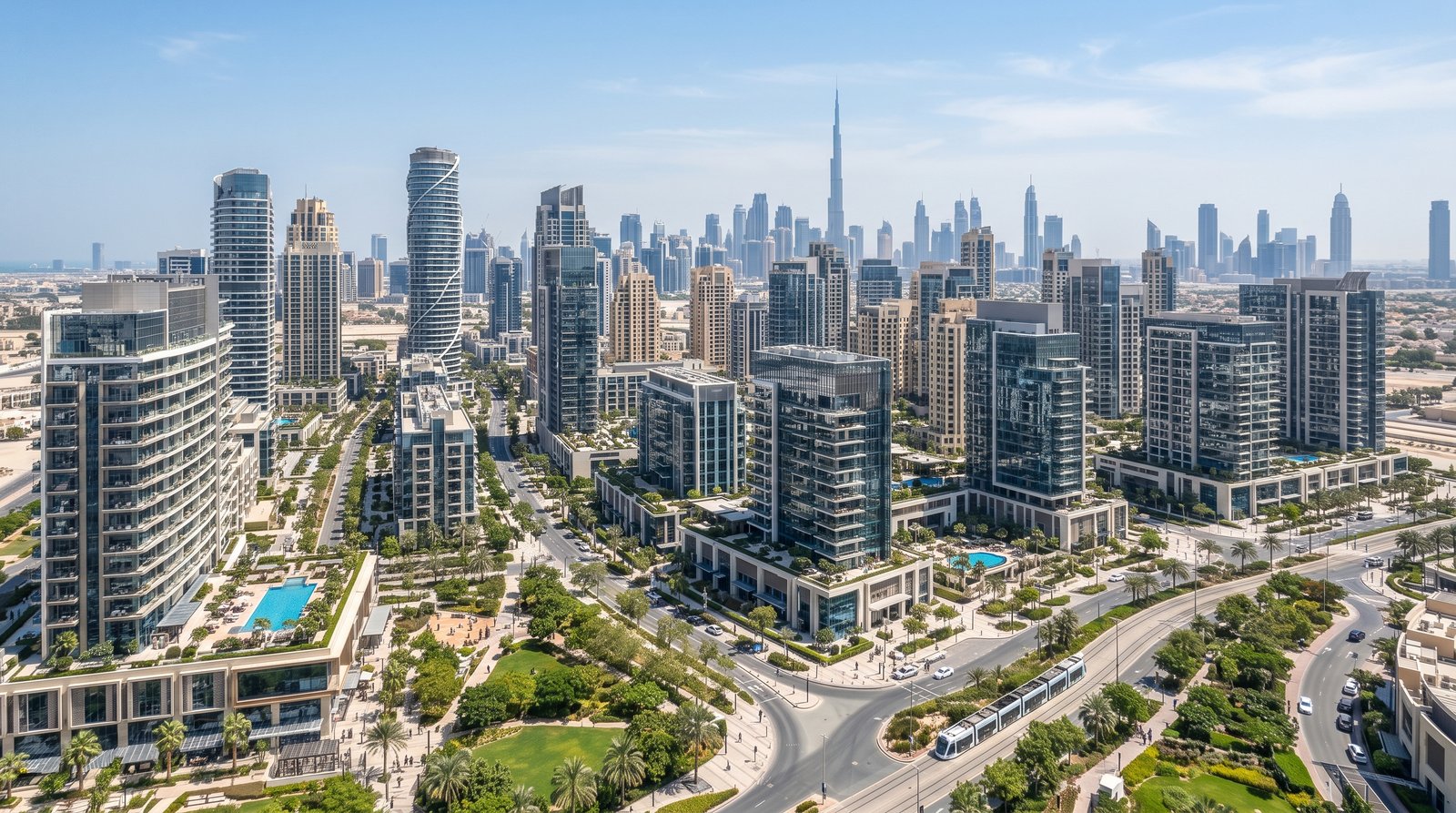
Foreign ownership is available in areas designated for non-UAE nationals. Well-known freehold communities include Dubai Marina, Downtown Dubai, Business Bay, Palm Jumeirah, Jumeirah Village Circle, and Dubai South.
How Can You Check Whether a Property Is Freehold?
Do not rely only on an agent's description. The DLD Property Status service identifies freehold property as available for purchase by all nationalities.
Before paying a reservation amount, confirm:
-
the exact property is eligible for foreign ownership
-
the seller or developer is correctly registered
-
title or project details match the marketed property
-
an off-plan project has DLD registration and escrow arrangements
For off-plan purchases, DLD requires the signed Sale and Purchase Agreement to enter the provisional register within 90 days of signing.
Why Does Dubai Attract International Property Buyers?
Dubai's transaction activity can provide useful market context, but buyers should still evaluate each property on its own merits. Investors who want to understand the wider case for Dubai can also read our guide on why Dubai is a top destination for property investment.
What Does 2026 DLD Data Show?
According to Dubai Land Department's Q1 2026 market report, Dubai recorded AED 252 billion in real estate transactions during the first quarter of 2026. Transaction value increased 31% year on year.
DLD also reported AED 148.35 billion in foreign investment, up 26%, across 48,445 foreign investments during the quarter.
These figures provide useful context for Dubai real estate market investment, but strong market activity does not guarantee returns on every property.
What Should Indian Investors Evaluate?
A Dubai property investment for Indians should be evaluated at the property level. Currency conversion can also affect how buyers view the property price in Dubai in Indian rupees, especially when comparing budgets from India with prices listed in AED.
Key checks include:
-
total purchase and registration costs
-
realistic rental demand
-
service charges
-
developer delivery history
-
future supply in the community
-
resale liquidity
-
financing costs
-
expected holding period
Investors comparing property prices in Dubai in Indian rupees should still calculate the property's core costs and returns in AED first.
How to Buy Property in Dubai From India
The process differs slightly between ready and off-plan property, but the main checks remain similar.

Step 1: Set Your Budget and Goal
Decide whether the property is for rental income, personal use, residency planning, or long-term investment.
Include registration fees, service charges, possible financing costs, and currency movement in the budget.
Step 2: Confirm Foreign Ownership Eligibility
Check that the exact property is eligible for foreign ownership. Do not assume every property in Dubai has the same ownership status.
Step 3: Verify the Seller, Developer, and Project
For a ready property, verify ownership details and the required developer NOC. For an off-plan purchase, confirm the project's registration, construction status, escrow arrangements, and developer details before paying. Our guide to buying off-plan property in Dubai explains the additional checks buyers should complete before committing to a new development.
Step 4: Review the Purchase Agreement
Check:
-
Payment schedule: Confirm each instalment amount, payment date, and accepted payment method.
-
Completion date: Check the expected handover date and what happens if completion is delayed.
-
Default clauses: Understand the consequences if either party fails to meet the agreement terms.
-
Transfer conditions: Review the requirements and fees for transferring or assigning the property.
-
Cancellation terms: Check when cancellation is allowed and whether any deposits or payments are refundable.
-
Applicable fees: Confirm registration, service, administration, and other charges before signing.
Off-plan contracts should be registered through DLD's provisional Oqood system.
Step 5: Transfer Funds Through Permitted Banking Channels
For a person resident in India, overseas property funding must comply with FEMA, the Overseas Investment framework, and applicable LRS rules.
Step 6: Complete DLD Registration
Ready-property transfers are registered with DLD and result in an electronic title deed. Off-plan buyers receive provisional registration while the development is under construction.
The wider process of buying property in Dubai from India also requires careful planning around remittance timing and documentation.
What Documents Do Indian Buyers Usually Need?
Requirements depend on the transaction.
Ready Property Documents
A non-resident buyer should generally expect:
-
valid passport
-
required sale documents
-
developer e-NOC where applicable
-
power of attorney if represented
DLD specifically accepts a valid passport for non-resident foreigners during property-sale registration.
Off-Plan and Mortgage Documents
Off-plan transactions can also involve:
-
signed Sale and Purchase Agreement
-
payment records
-
buyer identification details
-
Oqood or provisional-registration documents
Banks can request additional income, employment, bank statement, and credit documents when financing is involved.
What Costs Should Indian Buyers Budget For?
The property price is only one part of the required budget.
|
Cost |
Current Official Position |
|
Sale registration |
4% total, shown by DLD as 2% seller + 2% purchaser |
|
Title deed |
AED 250 |
|
Trustee/service-partner fee for ready sale |
AED 4,000 + VAT at AED 500,000 or above; AED 2,000 + VAT below AED 500,000 |
|
Mortgage registration, if financed |
0.25% of mortgage value |
|
Service charges |
Vary by project and community |
These current charges are published through DLD's Property Sale Registration service.
DLD's investor guidance states that the 4% sale-registration charge is divided equally between buyer and seller unless the parties agree otherwise.
The SPA should therefore be checked before assuming who will pay each cost.
Brokerage, valuation, bank, maintenance, furnishing, and insurance costs may also apply depending on the transaction.

How Can Indian Residents Send Money for a Dubai Property?
This is one of the most important parts of the process for India-based buyers.
What Is the LRS Limit?
The Reserve Bank of India's Liberalised Remittance Scheme allows a person resident in India to remit up to USD 250,000 per financial year for permitted current and capital-account transactions.
RBI also states that acquisition of immovable property outside India is governed by the Foreign Exchange Management Overseas Investment Rules, 2022 and related directions.
The USD 250,000 figure is the buyer's overall annual LRS limit. It is not a separate USD 250,000 allowance only for property.
If part of the limit has already been used for other LRS transactions, the remaining available amount is lower. RBI also requires PAN for LRS transactions.
Does the Same Rule Apply to Every Indian Citizen?
No. LRS applies based on Indian foreign-exchange residency, not simply nationality.
An Indian citizen living outside India may have a different funding route. For a large remittance for buying property in Dubai from India, use an authorised dealer bank and confirm current FEMA, tax, TCS, and documentation requirements before sending funds.
Can Indians Get a Mortgage in Dubai?
Yes, some Indian buyers can qualify for UAE mortgage financing. However, lenders assess each application based on several financial and property factors:
-
UAE residency: Some lenders offer different mortgage terms to UAE residents and non-resident buyers.
-
Income: Lenders review your income, employment, and ability to manage the monthly mortgage payments.
-
Existing debt: Current loans and financial commitments can affect your borrowing capacity.
-
Credit profile: Your credit history helps lenders assess your repayment reliability and overall financial risk.
-
Property value: The property's value and type can influence the loan amount and financing terms available.
-
Lender policy: Each bank sets its own eligibility criteria, interest rates, documentation requirements, and loan limits.
-
Property or project eligibility: The lender may assess whether the selected property or development qualifies for mortgage financing.
Non-resident mortgage products are generally more limited than resident options. Buyers should obtain written financing terms before relying on a mortgage to complete the purchase.
Can Buying Dubai Property Qualify You for a Golden Visa?
Indian investors considering residency should review our guide to the Dubai Golden Visa before treating visa eligibility as part of their property investment decision.

What Is the Current Dubai Property Threshold?
The current GDRFA Dubai Golden Residence service for investors states that a real estate investor can qualify by owning one or more properties with a total value of at least AED 2 million. The Dubai service currently describes the Golden Residence as valid for 10 years, subject to its conditions.
GDRFA also states that mortgaged property can be acceptable. DLD must certify the property value, and other requirements still apply.
Indian investors considering residency should review the latest UAE Golden Visa requirements before treating visa eligibility as part of the investment decision.
What Mistakes Should Indian Buyers Avoid?
Most major problems come from weak verification or unrealistic financial assumptions.
Avoid:
-
paying before verifying the seller or project
-
assuming every Dubai property is freehold
-
ignoring service charges and transaction costs
-
sending money without checking FEMA and LRS rules
-
relying only on projected rental returns
-
buying off-plan without confirming escrow and registration
-
assuming property ownership automatically guarantees residency
-
choosing a property only because the entry price is low
Reviewing the wider risks of buying property in Dubai can help test the developer, location, costs, and exit strategy before committing.
Ready to Compare Dubai Property Opportunities?
Can Indians Buy Property in Dubai? Yes, but the legal right to purchase is only the first step. The right property should also fit your budget, remittance capacity, income goals, preferred location, and long-term strategy.
Before committing, confirm the property's freehold status, calculate the full acquisition cost, verify the seller or developer, and make sure your funding route complies with the rules that apply to you.
If you are ready to compare current opportunities, Dubai Property Expo India can help you explore Dubai projects by location, budget, developer, property type, and investment objective so you can move from general research to a more focused property shortlist.
Frequently Asked Questions
Can Indians Buy Property in Dubai without residency?
Yes. Non-resident foreign buyers can purchase eligible freehold property. DLD accepts a valid passport for non-resident foreigners during sale registration.
Can Indian citizens buy property in Dubai freehold areas?
Yes. Foreign nationals can own property in designated freehold areas. Buyers should verify the exact property's status before paying.
Can Indians Buy Property in Dubai from India?
Yes. A buyer can be based in India, but the purchase must follow UAE property rules and applicable Indian FEMA and remittance requirements.
How much can an Indian resident remit for property abroad?
Under LRS, a person resident in India can remit up to USD 250,000 per financial year across permitted LRS transactions. The limit is not reserved only for property.
What is the DLD property registration fee?
DLD's sale-registration fee totals 4% of the sale value, shown as 2% for the seller and 2% for the purchaser. Other registration and service-partner fees can apply.
Can buying property in Dubai get a Golden Visa?
Potentially. GDRFA Dubai currently lists real estate ownership worth at least AED 2 million as a qualifying threshold for its investor Golden Residence, subject to all applicable conditions.